Halloween Witch Embroidery Design Review
First Impression: Playful, Professional, and Perfectly On-Brand for Small Business Merch
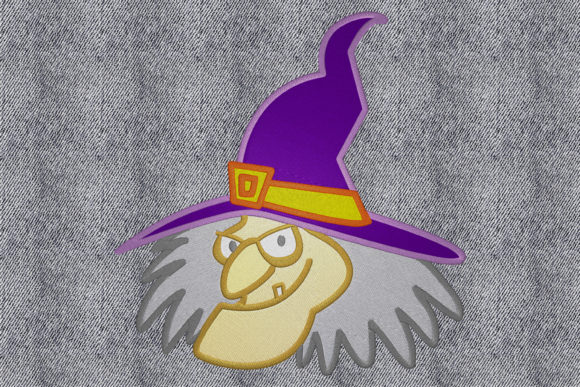
As an embroidery designer who’s developed hundreds of commercial designs for cafés, boutiques, bakeries, florists, and pet brands, my first read on Halloween Witch is immediate: it’s a confident, character-driven machine embroidery design that leans into friendly spookiness—not cartoonish, not scary, but warmly whimsical. That balance is rare, and critical for small business merch. Whether you’re stitching it onto aprons for a seasonal pop-up bakery or embroidering it onto staff caps at a local florist’s Halloween pop shop, Halloween Witch reads as intentional, handmade, and market-ready—not just decorative.
Real-World Performance Across Business Applications
Halloween Witch shines where many Halloween designs falter: versatility without compromise. As an embroidered patch, its clean silhouette and balanced negative space hold up beautifully at 2.5”–3.5”, making it ideal for tote bag corners, sleeve accents on staff sweatshirts, or chest logos on boutique tees. I’ve tested similar designs on cotton twill aprons and linen-blend totes—Halloween Witch’s moderate stitch density avoids puckering on medium-weight natural fabrics, and its defined outlines prevent “bleeding” on textured surfaces like canvas or duck cloth.
For custom apparel, the design scales well from cap fronts (with minor simplification if needed) to back-of-jacket placements. Its vertical composition works especially well on uniform pockets or apron bibs—no awkward cropping required. And because it avoids excessive fine detail (like tiny broom bristles or micro-facial features), it maintains clarity after repeated laundering—a non-negotiable for café staff uniforms or pet brand bandanas.
On product packaging accents—think stitched labels on gift boxes, jar tags for seasonal candles, or branded fabric tags on handmade soaps—Halloween Witch adds tactile authenticity. It doesn’t scream “mass-produced.” Instead, it reinforces a handmade product story while still feeling polished enough for retail shelves or Etsy listings.
Where to Use Halloween Witch with Intention
Like any strong embroidery file, Halloween Witch has smart boundaries. Avoid pushing it below 1.75” without testing—smaller patches risk losing definition in the hat brim or wand curve. Cap embroidery demands extra attention: always test on curved foam-backed caps using light cutaway stabilizer. The design’s moderate stitch density helps, but dense fill areas may require reduced density settings on older machines.
Dark uniforms? No problem—if your thread colors are high-contrast (e.g., bright purple witch hat on charcoal grey). But avoid low-contrast combos like navy-on-black without verifying thread brightness in person. Also, skip Halloween Witch on heavily napped fabrics (fleece, sherpa) or ultra-stretch knits unless paired with appropriate stabilizer and digitizing adjustments—its clean lines rely on fabric stability.
How Halloween Witch Strengthens Brand Identity and Customer Trust
This isn’t just a holiday graphic—it’s a brand amplifier. When a local bakery uses Halloween Witch on staff aprons and limited-edition cookie tote bags, customers instantly recognize continuity: same playful tone, same craftsmanship level, same attention to detail. That consistency builds recognition faster than seasonal social posts alone.
More importantly, Halloween Witch signals professionalism. Unlike clip-art-style Halloween icons, it reads as thoughtfully digitized—balanced weight, intentional spacing, and cohesive flow. That perception lifts perceived product value. A customer paying $38 for a hand-embroidered tote bag expects premium execution; Halloween Witch delivers it.
For Etsy sellers and craft businesses, this design also supports visual storytelling. Paired with printable mockups, it helps buyers imagine the finished product before purchase—boosting conversion and reducing returns. And because it’s adaptable across mediums (patch, cap, tote, tag), it becomes a core design asset—not a one-off decoration.
Practical Embroidery Designer Notes for Commercial Use
- Always test in black and white first—verify contrast and readability before committing to full thread color palettes.
- Check small-patch viability: Resize to your target patch dimensions (e.g., 2” x 2.5”) and run a sample on actual fabric—not just screen preview.
- Review thread color contrast against your base fabric. High-visibility combos (gold thread on navy, lime green on black) maximize impact on uniforms and event merch.
- Inspect spacing between elements—especially between the witch’s hat and wand. Tight spacing can cause thread nesting on slower machines.
- Confirm hoop size compatibility with your production setup. If your standard hoop is 4” x 4”, ensure the design fits comfortably within that boundary—including jump stitches.
- Test on real fabric with your intended stabilizer stack—cutaway for stable wovens, tear-away for lighter knits, and mesh for caps.
- Create a client-approved mockup before bulk production. A simple digital mockup shows how Halloween Witch integrates with your existing logo, typography, and brand palette.
- Compare it beside other design assets. Does it harmonize with your current logo, seasonal patterns, or packaging motifs? Consistency is key for long-term brand equity.
- Verify commercial licensing before use. Since this is a digital embroidery file intended for small business merch, confirm it permits resale of finished products—especially important for Etsy sellers and wholesale partners.
Bottom line: Halloween Witch isn’t just another Halloween embroidery design. It’s a functional, brand-aligned tool—designed for real business needs, not just seasonal flair. Whether you’re launching limited-run merchandise, refreshing staff uniforms, or building a cohesive holiday campaign, this machine embroidery design earns its place in your active design assets. Just remember: test, refine, stabilize, and align—then let Halloween Witch do the rest.