Green Snowflake: A Designer’s Real-World Embroidery Review
As a designer who’s stitched hundreds of winter-themed embroidery files for clients, Etsy shops, and boutique product lines, I opened Green Snowflake with quiet curiosity—not hype. Not because it promises “out of this world” magic (though the description leans poetic), but because snowflakes carry weight: they’re delicate, symbolic, and unforgiving under the needle. One misjudged stitch density or poorly balanced fill can turn whimsy into mush. So when I pulled Green Snowflake into my embroidery software to prep for a custom holiday tote bag launch, I asked the same questions I ask every time: Does it hold up at 3.5 inches? Does it breathe on terry cloth tea towels? Will customers feel the care in every branch?
First Impressions: Charm Without Clutter
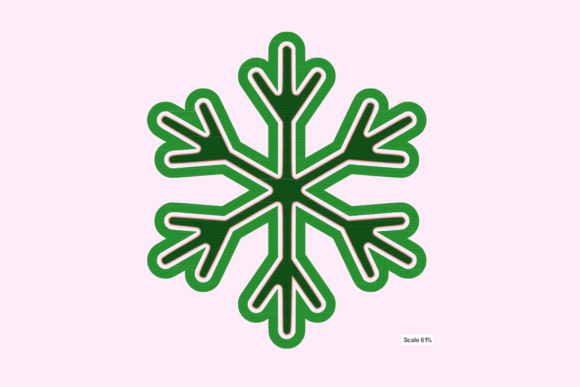
The Green Snowflake design lands with gentle confidence—no aggressive symmetry, no overwrought glitter effects. It’s a stylized, six-pointed snowflake built from clean satin stitch outlines and subtle fill stitch gradients that suggest depth without heaviness. The green isn’t neon or mint; it’s a soft, grounded forest tone—versatile across seasonal palettes and easy to pair with cream, charcoal, or navy thread. Visually, it reads as wintery but not wintry-exclusive: think December baby blankets, spring farmer’s market aprons with a frosty whisper, or even minimalist nursery decor where “winter” means quiet elegance—not candy canes.
Where It Shines (and Where It Asks for Care)
I tested Green Snowflake across three real project types: a heavyweight organic cotton tote, a ribbed cotton baby onesie, and a structured twill baseball cap. Here’s what stood out:
- Tote bags & pillow covers: Excellent clarity and dimension. The satin stitch edges stayed crisp, and the open negative space between arms kept the design from looking dense or heavy—even at 4.25 inches. Perfect for small shop merchandise where handmade polish matters.
- Baby embroidery & sweatshirt embroidery: On the onesie, I used lightweight tear-away stabilizer and reduced top tension slightly. Result? Soft, flexible stitching that didn’t stiffen the fabric. The snowflake’s moderate stitch density meant no puckering, and the scale (tested at 2.75") read beautifully on tiny chests—ideal for personalized gifts.
- Caps & curved surfaces: This is where attention matters. On the cap, I rehooped twice to align the center point precisely. The design doesn’t have fine interior details (like micro-dots or nested loops), so it adapted well—but avoid placing it too close to the bill seam. A 3-inch max size worked cleanly.
It’s less ideal for ultra-thin fabrics like silk charmeuse without backing—or stretchy knits without proper cut-away stabilizer. And while it handles dark fabric gracefully (thanks to its generous outline weight), avoid pairing it with overly textured weaves like bouclé unless you’re willing to test stabilizer layers first. No applique design tricks here—Green Snowflake relies on precision stitching, not fabric layering.
Design Integrity in Commercial & Creative Contexts
For Etsy sellers and craft business owners, Green Snowflake earns trust quietly. It doesn’t shout—it invites. That matters when customers scroll past dozens of holiday embroidery files. Its restraint makes it feel intentional, not algorithmic. I used it on a limited-run set of linen kitchen towels: photographed flat and draped, styled with dried eucalyptus and ceramic mugs. Buyers responded to how “calm” and “thoughtful” it felt—not just “festive.” That emotional resonance lifts perceived value, especially for premium handmade products.
It also holds up in digital contexts: clean edges translate well to printable mockups, and its shape scales smoothly for social thumbnails or digital embroidery file previews. As a design asset, it’s versatile enough for holiday gift tags, boutique packaging stamps, or even subtle branding on embroidered patches—just keep the size above 1.8 inches to preserve legibility.
Practical Designer Notes Before You Stitch
Before committing to your first finished product—or listing it on Etsy—here’s what I’d do:
- Test the Green Snowflake machine embroidery design on scrap fabric matching your final project’s weight and stretch.
- Check thread color contrast: try it in olive, sage, and deep emerald against both light and dark backgrounds—you’ll see which green best honors the design’s quiet sophistication.
- Review stitch density in your software. If it feels heavy for baby items or lightweight apparel, consider reducing density by 5–8% (if your format allows).
- Confirm hoop size compatibility. While it’s adaptable, very small hoops (under 3 inches) may require repositioning or slight scaling—don’t force it.
- Inspect corners and branch tips: look for running stitch travel lines that might show on sheer or light fabrics. Most machines handle these cleanly, but better safe than sorry.
- Run black-and-white mockups. If the shape loses personality in grayscale, it may rely too much on color nuance for certain applications (e.g., monochrome branding).
- Verify licensing terms before selling finished items or bundling the digital embroidery file—commercial use isn’t assumed, even for winter-themed designs.
One last note: Green Snowflake doesn’t try to be everything. It’s not a maximalist holiday motif. It won’t dominate a full-sleeve sweatshirt embroidery. But as a focused, elegant accent—on a mug cozy, a linen napkin, a child’s stocking, or a small-batch boutique sweater—it adds warmth, intention, and quiet distinction. In a sea of busy, over-digitized winter embroidery, that kind of clarity is rare. And for designers building brands rooted in authenticity—not trend-chasing—that’s worth more than sparkle.