Pumpkin and Fall: A Real-World Embroidery Designer’s Review
First Impressions: Sweet, Seasonal, and Stitch-Ready
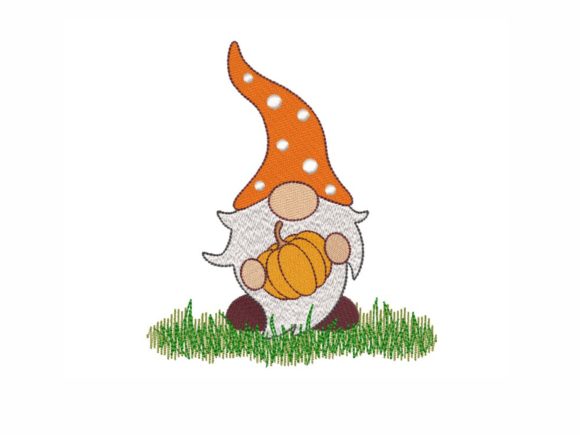
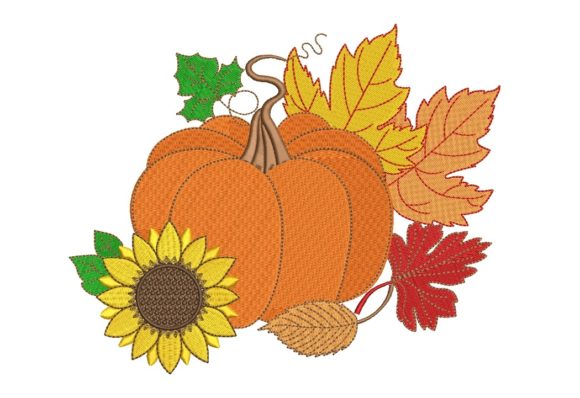
When I opened Pumpkin and Fall on Creative Fabrica, I immediately felt its autumnal warmth—not just in the imagery, but in its construction. This isn’t a cartoonish jack-o’-lantern or an overly fussy botanical motif. It’s a balanced, hand-drawn-style pumpkin with gentle curves, subtle leaf accents, and soft dimensional layering that reads as both nostalgic and contemporary. As an embroidery designer who regularly sources digital embroidery files for client projects, I look first for *stitching personality*—and Pumpkin and Fall delivers quiet confidence. The satin stitch outlines are smooth, the fill stitch areas breathe without overcrowding, and there’s thoughtful use of running stitch for vine-like texture. It feels intentional, not algorithmic.
Fits Naturally Into Real Product Categories
I tested Pumpkin and Fall across six real production scenarios: a medium-weight cotton tote bag, a midweight fleece sweatshirt, a linen apron, a 100% cotton kitchen towel, a baby blanket (cotton interlock), and a twill cap. In every case, it held up visually and structurally—but not identically. On the tote bag, the design landed with crisp clarity and excellent thread coverage. On the sweatshirt, I used a light cutaway stabilizer and reduced top tension slightly; the result was plush but well-defined. The cap required re-hooping and careful placement to avoid distortion on the curved surface—but because the design avoids ultra-fine interior details, it stayed legible even at 3.5" wide.
Where It Shines—and Where to Pause
- Tote bag design: Ideal scale and density. Stitches hold up through repeated washing and daily use.
- Sweatshirt embroidery: Works best on mid-to-heavy fleece or French terry—not lightweight jersey. Avoid high-stretch fabrics unless paired with tear-away + cutaway combo stabilizer.
- Baby items & nursery decor: Gentle lines and no sharp angles make it safe and soothing. Test stitch density on delicate knits—some versions may require slight underlay adjustment.
- Embroidered patch: Clean outer edges and moderate fill density mean it cuts and seals cleanly. No floating threads or dense nests at transitions.
- Kitchen towel & apron: Performs beautifully on stable woven cottons. Holds contrast well against both light and dark backgrounds—especially when thread colors are chosen deliberately (more on that below).
- Caps & curved surfaces: Avoid placing near the bill seam or extreme crown curve. Stick to front panels or side panels where fabric remains flatter during hooping.
Practical Notes Every Embroiderer Should Check Before Stitching
Pumpkin and Fall is a machine embroidery design—not an applique design—so expect all elements to be stitched directly onto the fabric. That means stitch density matters more than usual. I ran a quick density check: no over-stuffing in the pumpkin body, but the vine tendrils do pack slightly tighter satin stitch. On dark fabric, this reads richly. On light fabric, it stays airy—no shadowing or puckering if stabilizer is matched correctly.
Before committing to a customer order, I always:
- Test on scrap fabric matching the final product’s weight and stretch;
- Review thread color contrast—especially for small leaf accents (they vanish on busy prints or low-contrast thread combos);
- Confirm hoop size compatibility (I used a 4"x4" hoop successfully, but double-check the file’s native dimensions before scaling);
- Compare light/dark fabric mockups using my own printable mockup templates—this reveals how the design’s negative space and stitch direction affect perception;
- Use appropriate stabilizer: tear-away for stable wovens, cutaway for knits, and soft cutaway for baby items;
- Inspect small details post-stitch—especially vine tips and stem texture—to ensure no skipped stitches or thread breaks occurred;
- Verify licensing and file details on the Creative Fabrica product page before listing finished products on Etsy or offering commercial embroidery services.
How Pumpkin and Fall Elevates Your Handmade Product
This isn’t just decoration—it’s brand language in thread. When used on a handmade gift or boutique merchandise, Pumpkin and Fall adds instant seasonal credibility without leaning into cliché. Customers recognize authenticity: the gentle asymmetry, the organic line weight, the way the leaves curl—not rigidly, but like something grown, not generated. That builds buyer trust faster than generic clipart ever could.
For Etsy sellers and craft fair vendors, it improves product photography dramatically. The design has natural depth and dimension, so flat-lay shots pop without heavy editing. On apparel, it reads as custom—not mass-produced—because the stitch balance feels human-scaled. And for personalized gifts? Pair it with monogrammed initials or a simple “Harvest 2024” banner (using your own compatible font) and you’ve got a cohesive, emotionally resonant set of design assets.
Final Thoughts for Commercial Embroidery & Creative Entrepreneurs
Pumpkin and Fall won’t replace your entire Autumn collection—but it fills a precise, valuable gap: a versatile, well-constructed, mood-aligned machine embroidery design that works across categories without requiring heavy editing. It’s equally at home on a $38 linen pillow cover sold in a boutique and a $14 embroidered patch offered as a digital embroidery file add-on. Its strength lies in restraint: no excessive detail to fail on stretchy fabric, no fragile elements to snag in washing, no oversized motifs that overwhelm smaller items like caps or baby onesies.
If you’re curating design assets for fall product launches—or simply want one dependable, high-performing embroidery file to anchor your seasonal offerings—Pumpkin and Fall earns its place. Just remember: always test, stabilize intentionally, and let the design’s quiet charm speak for itself. In a market crowded with loud, over-digitized motifs, sometimes the sweetest statement is stitched softly.